How To Ruin A Festival With Reverse Engineering
A deep dive into reverse engineering a React Native festival app, uncovering secret inputs hidden in Hermes bytecode through careful analysis of local validation patterns.
- reverse-engineering
- experiment
(weeks before the festival starts)
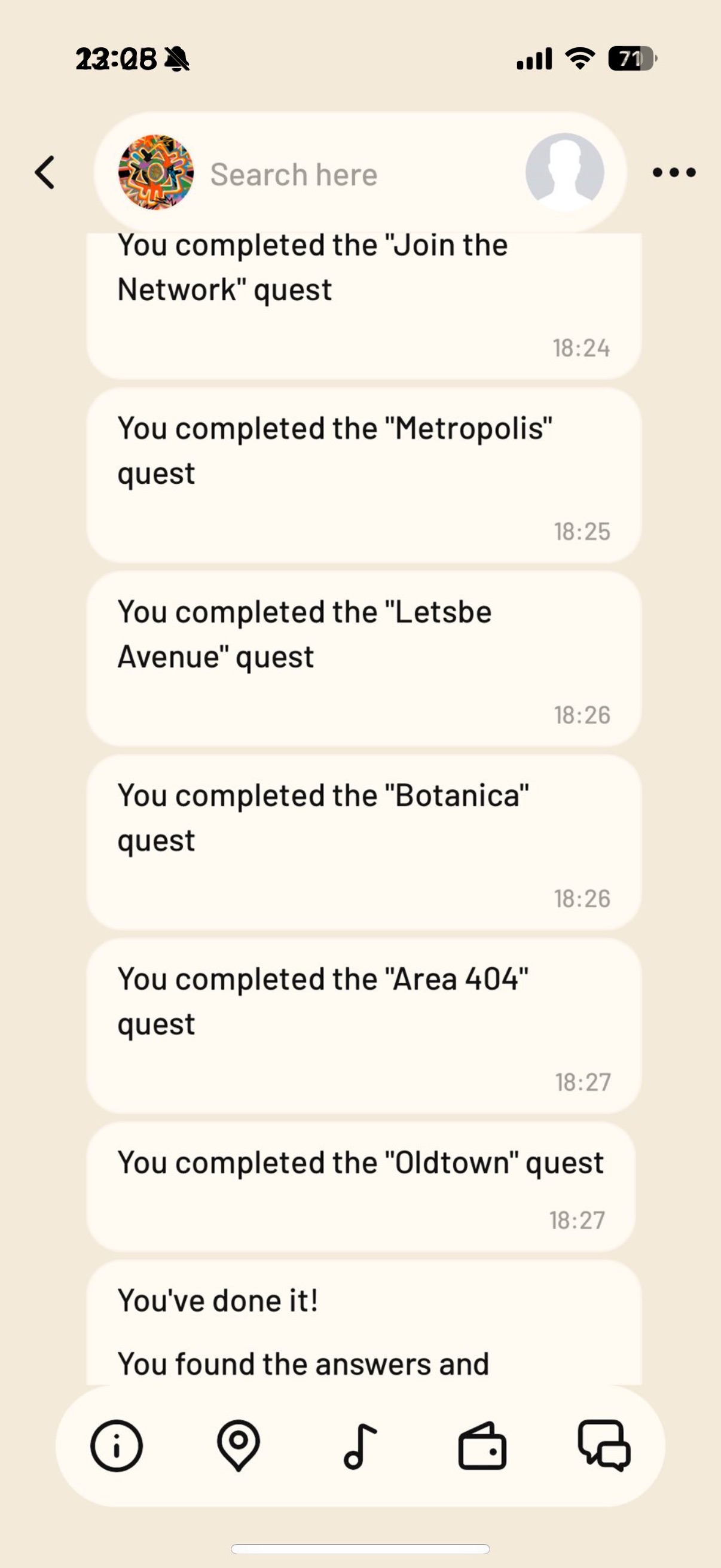
I was traveling back from London on my Avanti train (shout out Avanti) and downloaded Boomtown app, because they’d just emailed me about it. First of all, if you haven’t been to Boomtown, you should, it was unreal. Anyway, Boomtown is more than a festival, it’s a whole village of activities and a storyline. As part of discovering the storyline, you can complete quests and enter a password in the app to unlock the next. When I downloaded the app I saw the form for the first quest. Curiosity did the rest. I entered in the word “beans” and pressed submit. Every wrong answer gave the same red response “try again” instantly. No loading, no wobble, just a slap on the wrist. I was on the train with no signal… That screamed local validation, so I began my quest.
The Package With A Secret
I pulled a free copy of the app, cracked the XAPK into a ZIP, and fished out base.apk. JADX lit up with the familiar Android file tree, and I did what any self-respecting treasure hunter does first: searched for the words I had seen on screen.
“try again” did not appear in Java. It appeared in an asset: assets/index.android.bundle. That filename is React Native’s calling card. Java was just the wrapper. The brains were elsewhere.
I dug a little deeper and found IS_HERMES_ENABLED = true. Hermes is React Native’s JavaScript engine. Good, now I knew the country I was in.
Hermes Soup
I tried opening index.android.bundle in a text editor. Absolute gibberish. Time to look at the first bytes.
xxd -l 16 index.android.bundleThe header started with c6 1f bc 03. That is the Hermes bytecode signature. I also ran file on it and got Hermes bytecode version 96. Now I knew exactly which beast I was dealing with.
Microsoft Moment
Like any obedient engineer, I tried the official route first. I built hermesc on Windows, a heroic Visual Studio install and a decent compile later. Then I pointed it at the bundle and got a wall of “invalid UTF-8” errors. The bundle was newer than the tool supported. Brilliant. Time to pick the lock with third-party tools.
The Bytecode Whisperers
I cloned hermes-dec and fired the disassembler and decompiler at the bundle.
python -m hermes_dec.disassembly.hbc_disassembler path\to\index.android.bundle > bundle.hasm
python -m hermes_dec.decompilation.hbc_decompiler path\to\index.android.bundle > bundle.js
Out came a JS-ish script, not pretty source but a very serviceable map. Registers like r0 and r1, labels like case 70, calls that looked like StrictEqual and JumpFalse.
The Words That Open Doors
I stopped reading from the top. The early pages set globals like __DEV__ and process, not interesting. Instead I searched for the exact words that had lured me in.
First search terms: “try again”, “password”, “secret”. Then I searched for a very Boomtown-coded noun I had spotted earlier in the question on the app: “mycelium”. That one was gold. It sliced the file down to a handful of sections where user input met literal strings.
There it was. User text loaded into a register, a constant string loaded into another, StrictEqual, then a jump to success or a jump to an error path that set the “try again” message. In some places, a tiny array of accepted words appeared, then an .includes-style check in bytecode clothing. Bosh.
The Reveal
At that point the rest felt like archaeology. Brush away a few control-flow labels, piece together the ifs and elses, and I had the whole list. The red “try again” message had done more than taunt me. It had given me the exact breadcrumb I needed to find the handlers that cared.
What I Learned While Chasing A Festival App
🔍 Key Takeaways
- If the app tells you “try again” with zero delay, you are probably looking for a local check, not an API call.
- React Native packs logic into
index.android.bundle. The Java is often just a doorman.- Hermes bytecode looks like soup until you check the header.
c6 1f bc 03means Hermes,filewill tell you the version, and version 96 explains why olderhermescbinaries sulk.hermes-dec(andhbctoolif needed) turns that soup into a readable script. Not source code, but plenty to follow control flow and extract strings.- Strings are your compass. UI text, distinctive nouns, anything weird on screen. In minified worlds, those survive as beacons.
The Minimal Trail Of Breadcrumbs
🛠️ Quick Reference Commands
# confirm the bundle type
xxd -l 16 index.android.bundle
file index.android.bundle

# decompile enough to read the plot
python -m hermes_dec.disassembly.hbc_disassembler path\to\index.android.bundle > bundle.hasm
python -m hermes_dec.decompilation.hbc_decompiler path\to\index.android.bundle > bundle.js
Open
bundle.jsin your editor, search for the words you saw on screen, then look for comparisons near them. When you see user input on one side and constants on the other, you are home.
Epilogue
I started with a hunch from a “try again”. The app’s secrets were not behind a server. They were sitting in the bundle, waiting for someone to ask the right words. And that’s how you ruin the quest part of your festival experience weeks before the festival starts.